
General Medicine · 4 min read
Taking a History in a Busy OPD Without Missing the Important Thing
You were taught history taking with an hour and a simulated patient. The OPD gives you a fraction of that, with interruptions, and a queue visible through the door. The structure that survives that pressure is not a shorter version of the textbook history — it is a differently ordered one.
At a glance
| Open with | One open question, then silence |
|---|---|
| Interrupting | Feels faster, is slower — you get fragments instead of a narrative |
| Always ask | What the patient is actually worried about |
| Never cut | Safety-netting |
| Document | The negatives you deliberately sought, not only the positives |
Why the opening matters more than anything after it
If you ask an open question and then stay quiet, most patients will give you a structured account of their problem in well under a minute. Within it will usually be the chronology, the character of the symptom, the effect on their life, and often the diagnosis.
Interrupting to ask a specific closed question early does the opposite of what it feels like it is doing. It converts a narrative into a series of answers to your questions, which means you now only learn what you thought to ask. In a busy clinic, that is where things get missed — not because you ran out of time, but because you spent the time badly.
The practical technique is simply this: ask, then do not speak. Look at the patient rather than the screen. Let the first pause pass, because patients often add the most important thing after it.
Then narrow deliberately
Once the account is finished, you are narrowing rather than exploring, which is fast. Clarify chronology first, because it does more diagnostic work than any other single thread. Then the character of the main symptom, what makes it better or worse, and what has changed recently.
Then ask the question that consistently earns its time: what are you most worried this might be? The stated complaint and the underlying fear are frequently different, and a consultation that addresses the complaint but not the fear leaves the patient unsatisfied no matter how correct it was. It also surfaces relevant history that would otherwise stay unmentioned.
The parts you cannot skip
- Medication history, including over-the-counter and traditional or herbal remedies, which patients frequently do not consider to be medicines and will not volunteer.
- Allergies, with the nature of the reaction.
- Red flag symptoms relevant to the presentation.
- Anything that changes urgency rather than diagnosis — because in a clinic your main job is often to sort urgency correctly rather than to reach a final answer.
Safety-netting, and why it is the last thing to cut
Safety-netting means telling the patient specifically what should prompt them to come back, how soon, and where to go. It is the step that gets dropped when a clinic overruns, and it is the step that most reliably prevents harm, because it converts your diagnostic uncertainty into a plan the patient can act on.
Vague advice does not work. “Come back if you get worse” leaves the judgement with someone who has no way to make it. Name the symptoms, name the timeframe, and name the place. Then ask them to tell you what they will do, because that is the only way to know the message landed.
Documenting so the next person is not starting again
Record the negatives you specifically asked about, not only the positives. A note saying which red flags were absent tells the next clinician that the question was asked, which is entirely different from silence. Record what you told the patient, especially the safety-netting advice. Record uncertainty honestly — a note that says the diagnosis is unclear and what would change the assessment is far more useful than false confidence.
What can go wrong
| Pattern | What it produces |
|---|---|
| Interrupting in the first thirty seconds | Fragments instead of a narrative; missed context |
| Typing throughout | Patient stops elaborating; cues missed |
| Never asking about the underlying fear | Correct consultation, unsatisfied patient, relevant history unmentioned |
| Vague safety-netting | Patient cannot act on it; delayed presentation |
| Documenting only positives | Next clinician cannot tell what was asked |
Last-minute checklist
- One open question, then silence — let the first pause pass
- Chronology first when narrowing
- Ask what they are worried it might be
- Medications including over-the-counter and herbal; allergies with the reaction
- Red flags relevant to the presentation
- Specific safety-netting: what, how soon, where
- Ask them to repeat the plan back
- Document the negatives and the advice given
References
- Standard clinical methods texts on consultation structure
- Your hospital’s documentation standards
Clinical review
Reviewed by Dr Harsh, MBBS.
Spotted something wrong? Corrections to the contact page are prioritised over everything else.
Test yourself
5 questions on this topic
Answers are explained. Nothing is recorded anywhere but your own browser.
Read next
General Medicine 24 min read
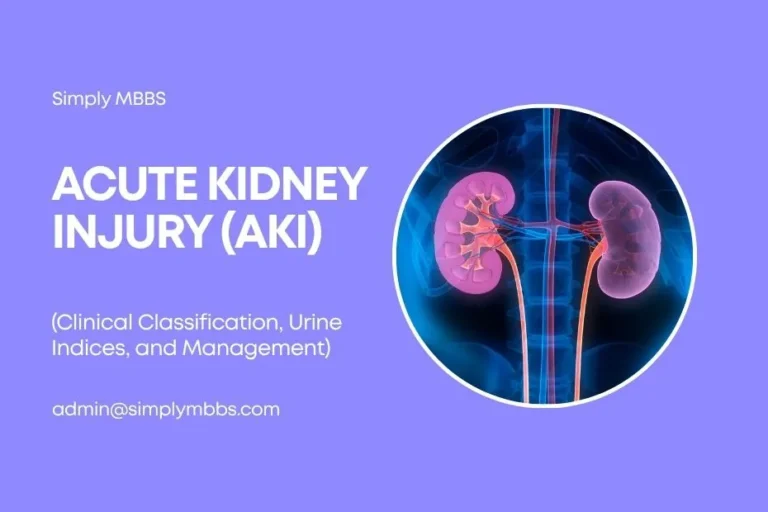
Acute Kidney Injury (AKI): Clinical Classification, Urine Indices, and Management
Did you know that Acute Kidney Injury affects nearly 1 in 5 hospitalized patients worldwide, yet many cases go unrecognized until severe…
General Medicine 4 min read
Intravenous Fluids: Choosing Them and the Errors That Cause Harm
Fluids are prescribed more casually than any other drug and cause more avoidable harm than most.

General Medicine 4 min read
Recognising Anaphylaxis: The Decision That Cannot Wait
How anaphylaxis actually presents, why the diagnosis is clinical, and the two errors that cause preventable deaths.